A sink with running water sounds simple until you try to fit one into a minivan. I wanted to park anywhere, cook, eat and wash the dishes without setting anything up outside. Here is how my sink module came together.
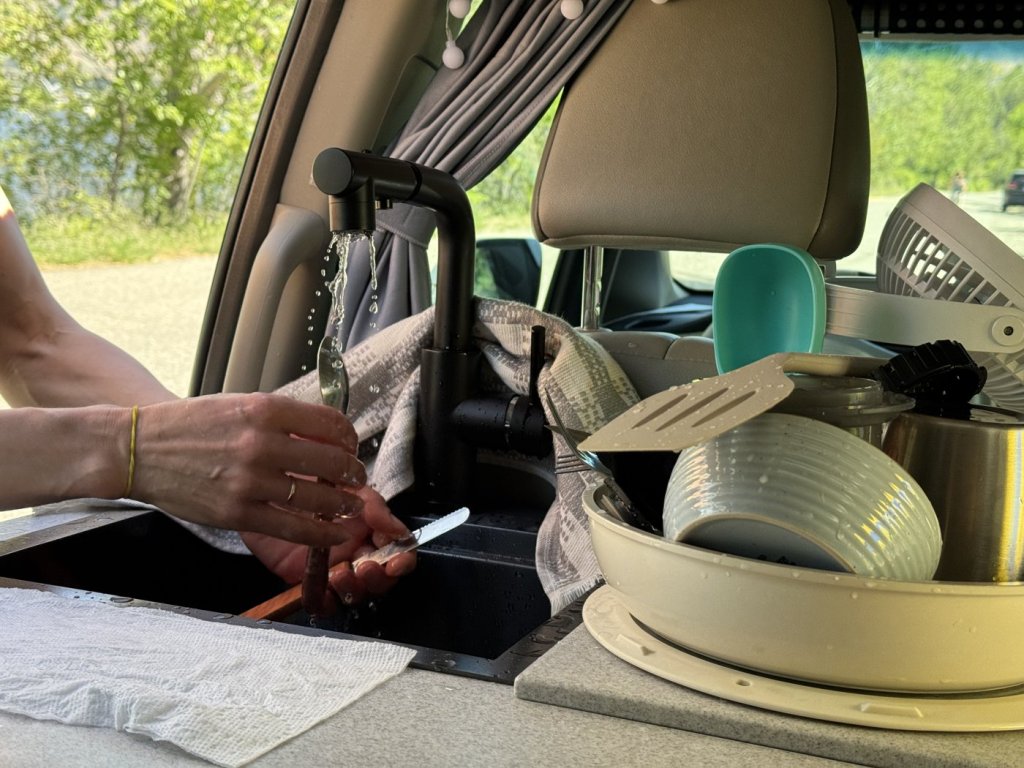
Cabinet and Countertop
The reclined driver’s seat and the 74″ bed limited the cabinet depth to about 18″. I used 1/2″ plywood, angled the back for seat clearance and left the passenger-door side open for easy tank access. It sits above the second-row seat hardware, leaving storage below, and bolts to a steel angle foundation.
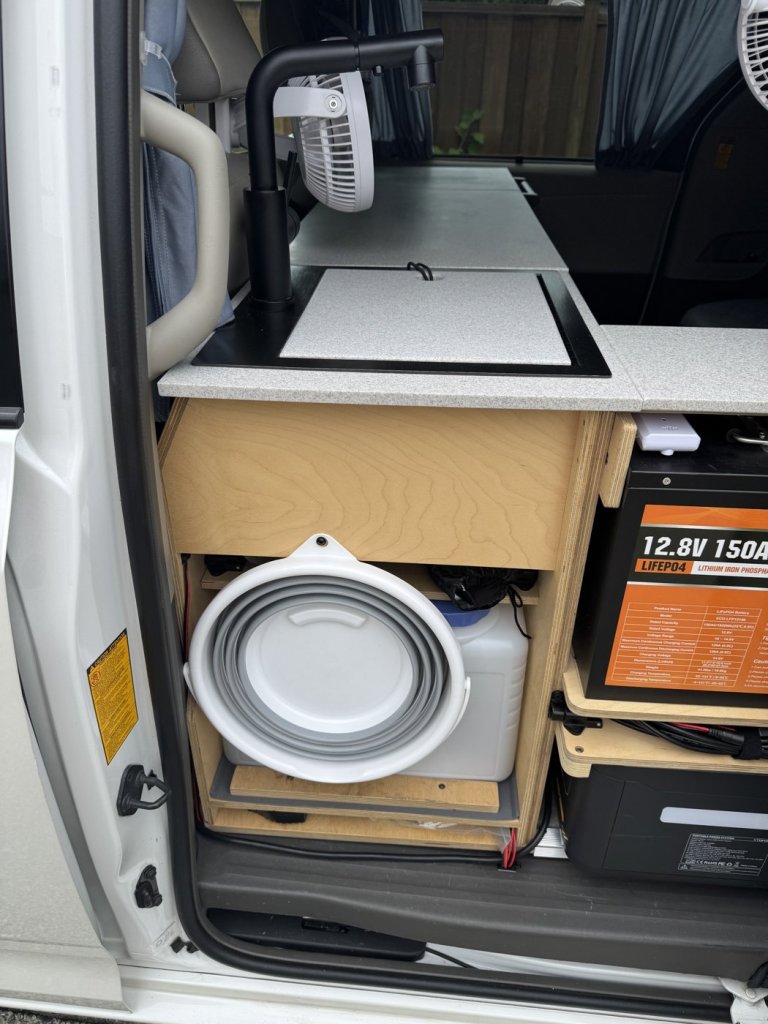
The countertop is salvaged Corian: easy to clean, repairable and needing no sealing.
Sink and Faucet
I chose a drop-in bar sink with a 10″ x 13″ opening, 9″ depth and an integrated drying rack. Its original wooden cutting board lid warped in +45°C heat, so I made a Corian one.
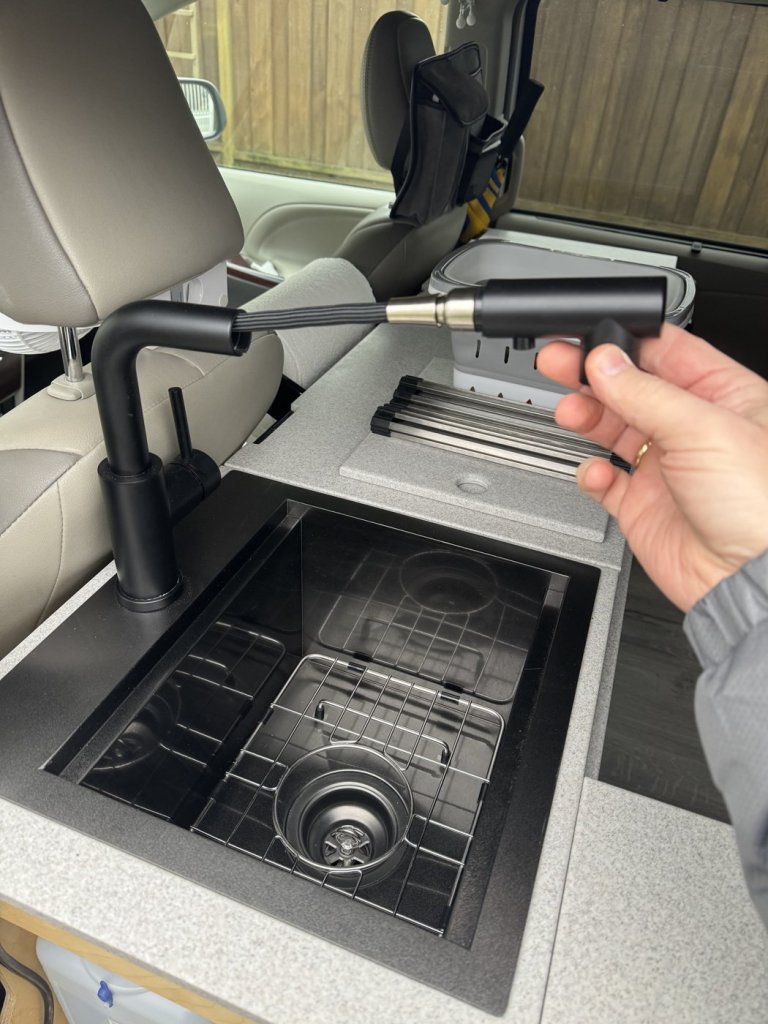
The faucet is compact, controls water flow and has an extendable hose, adjustable spray and pause mode.
Pump, Filter and Water Tanks
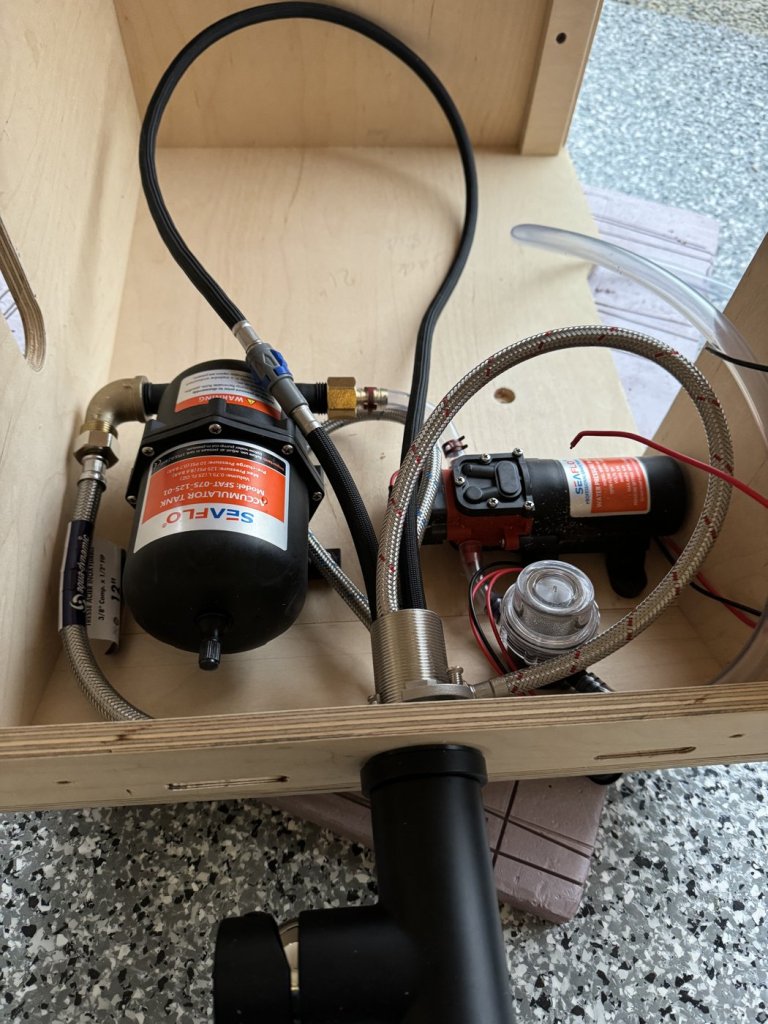
A 12V self-priming pump with automatic on/off runs from the main battery, and a switch cuts its power at night. An accumulator tank reduces pump cycling. Water flows from the intake through a filter and pump to the accumulator, then to the faucet.
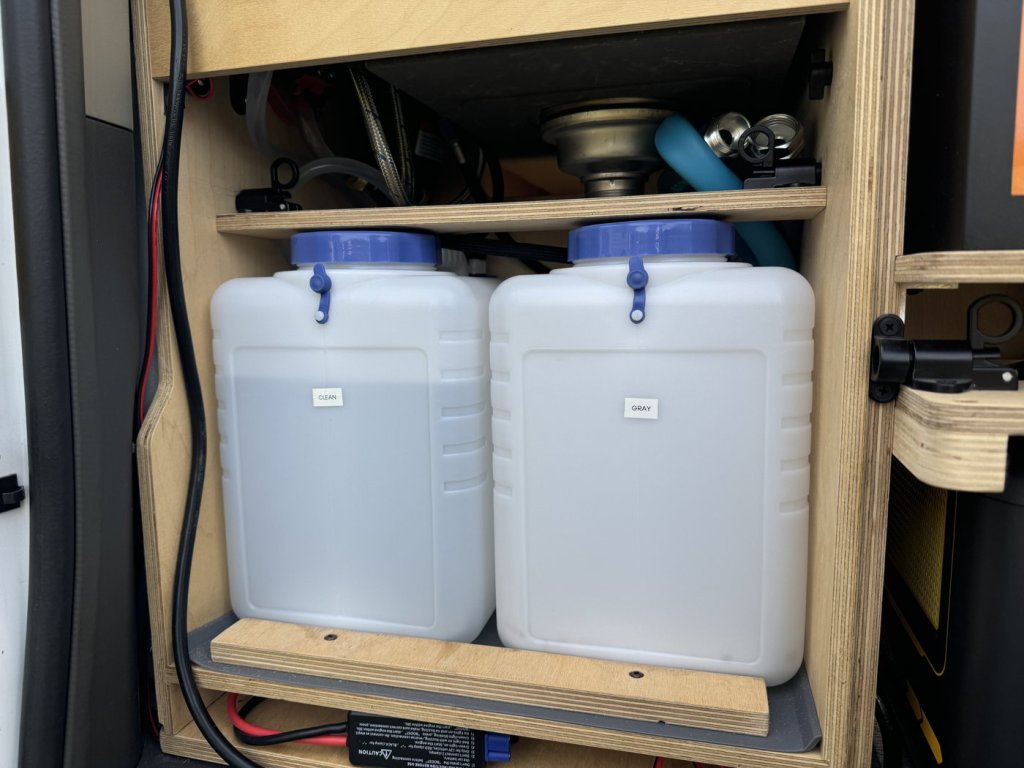
Below sit two rectangular 15-liter HDPE tanks, clean and gray, with equal volumes to prevent overflows. The clean tank moves easily to a campground picnic table.
Quick Facts
- Cabinet: 1/2″ plywood, secured with M6 bolts to steel angles
- Countertop: salvaged Corian
- Sink: drop-in bar sink, 10″ x 13″ opening, 9″ deep
- Pump: 12V self-priming, with accumulator tank
- Tanks: two 15-liter HDPE, clean and gray
Next up, Episode 5: The Fridge Module. I cover the fridge, extra insulation, ventilation, a folding table and a soft-closing lid.

