One of my biggest design decisions was an indoor kitchen instead of an outdoor setup. I first planned a propane stove, but the limited clearance between the countertop and the ceiling made an open flame a real safety risk, and burning propane indoors could create health hazards. So I went fully electric: an induction cooktop powered by battery and solar. The result is a cooking and storage unit that is a true transformer on rails.
Location and Layout
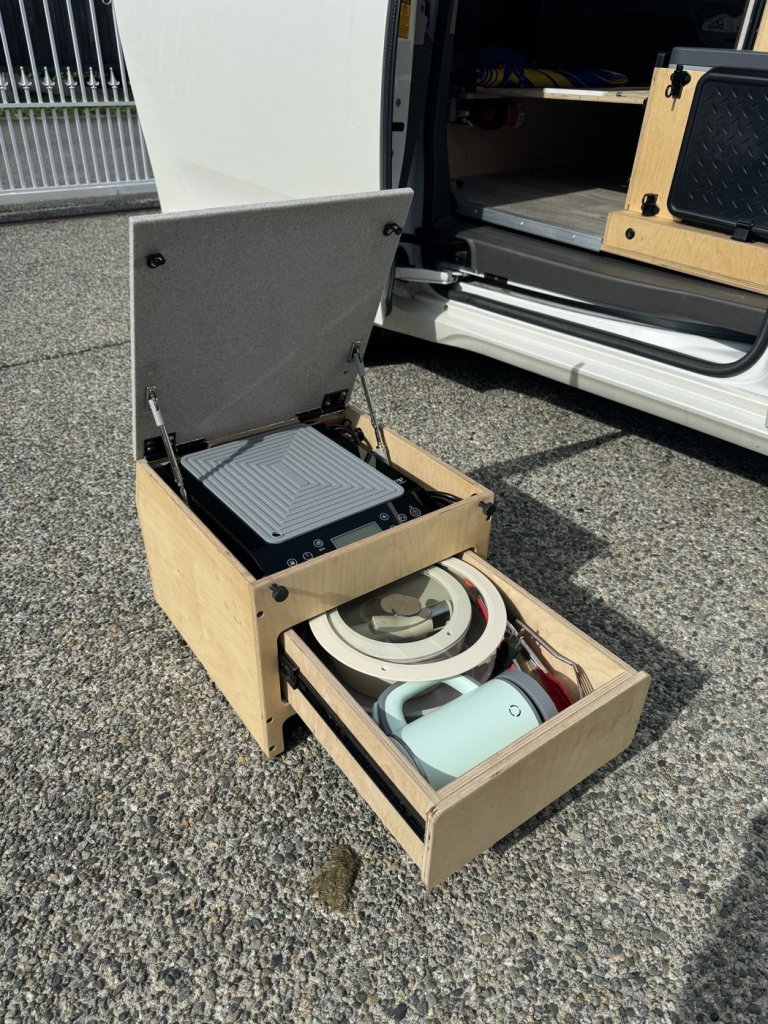
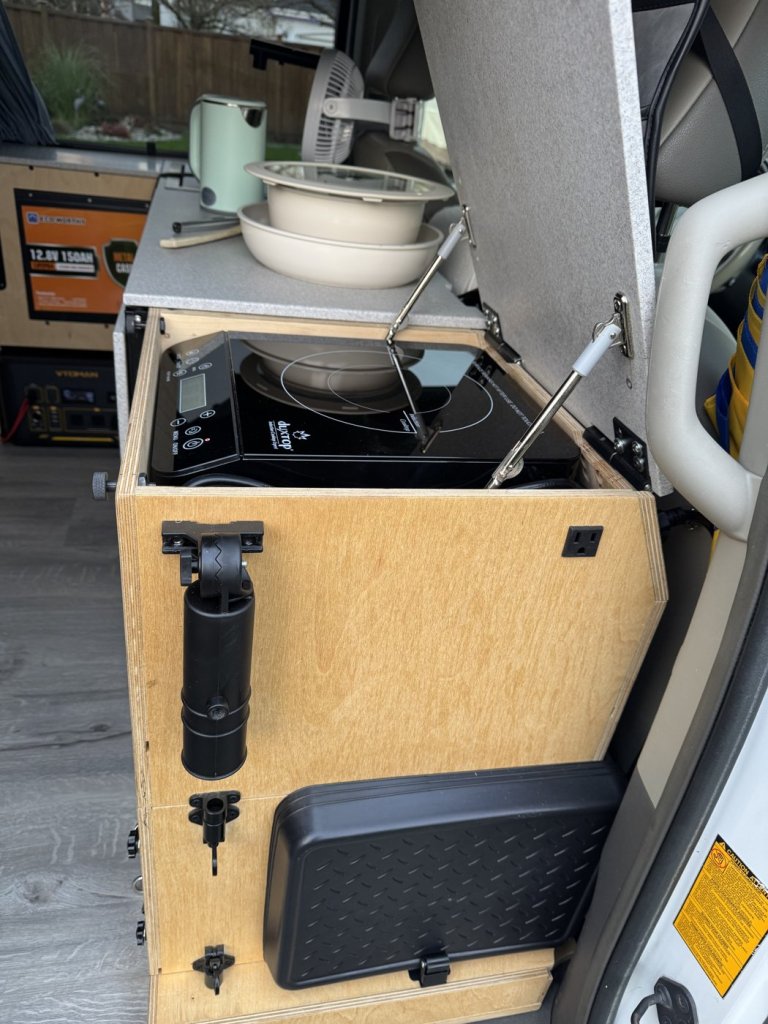
I placed the kitchen as the rightmost cabinet module, near the entry so steam can escape through an open or slightly lowered window. That spot also holds the spare tire access, so unlike the sink and fridge, this unit has to be easy to remove. I also wanted it compact enough to carry outside. The cabinet therefore has three sections: a base over the steel angle foundation and spare tire access, a middle storage unit, and a detachable cooking unit on top.
Sliding Configurations
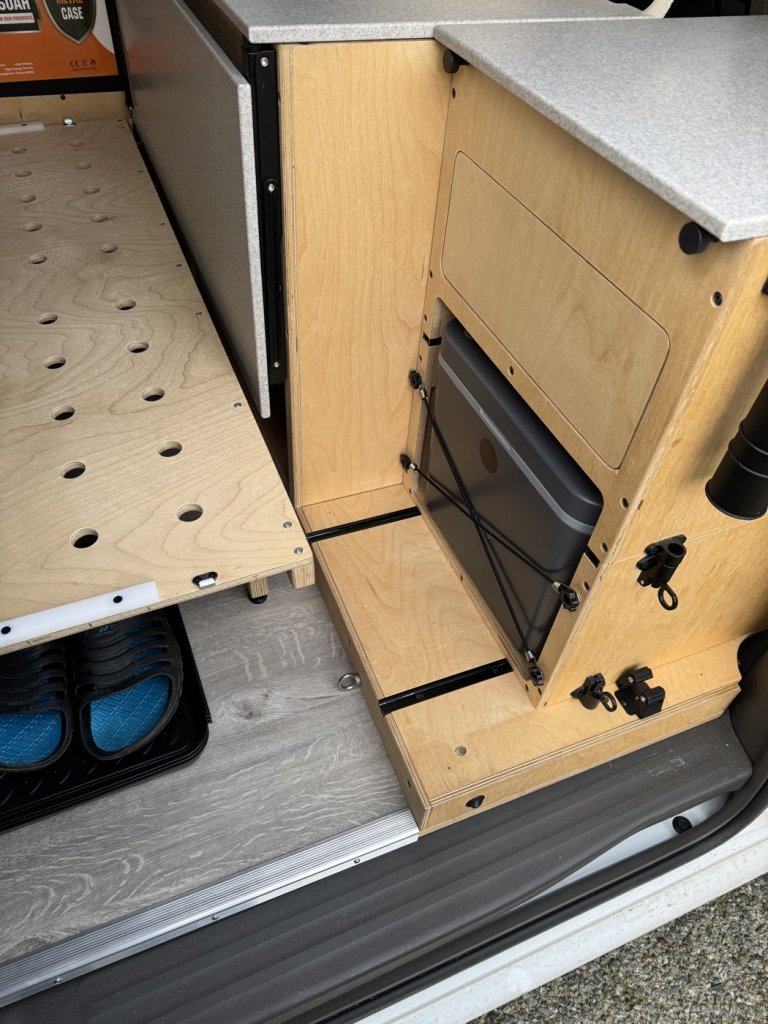
Woodworking drawer slides and HDPE gliding inserts let me shift or fully remove the units. Slide the storage unit forward, with the front passenger seat moved fully forward, and you get easier entry and more legroom when the bed is set up. Slide it back and the cooktop sits closer to the sofa. With the cooking unit removed, nighttime access to the toilet is easier. Oversized latches lock everything for travel.
Cooking Unit
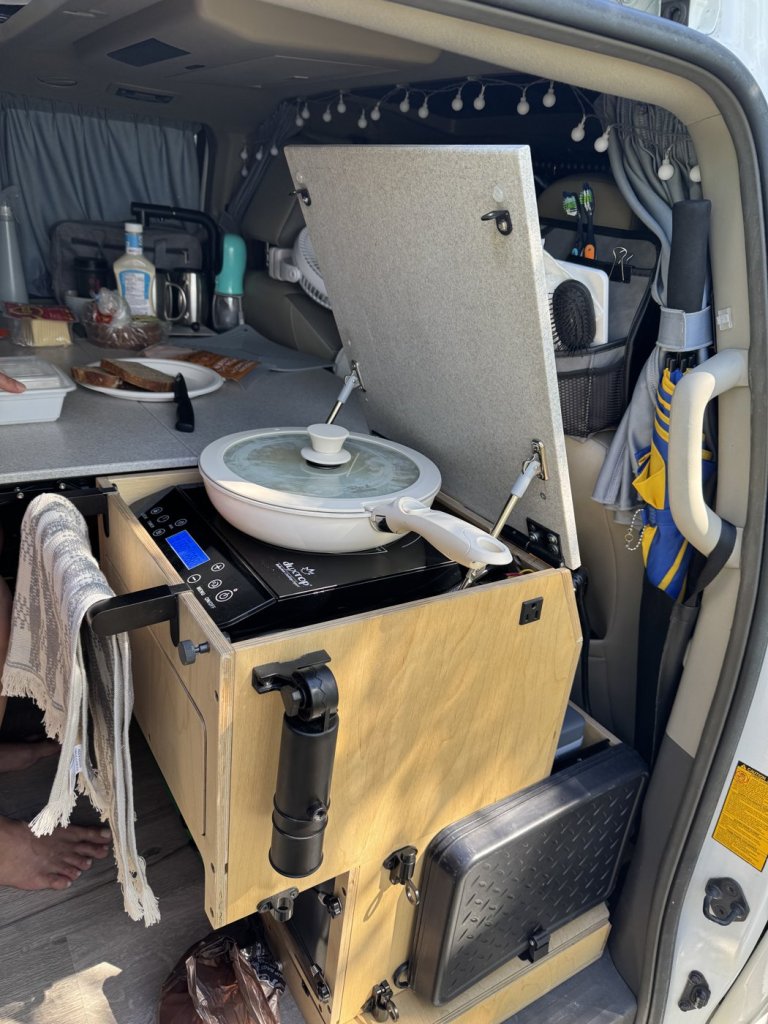
The cooking unit’s induction cooktop sits under a countertop lid with soft-close arms and two rotating locks. It gets 120 V power through a detachable connector from my power station inverter, and a side outlet runs a kettle or panini press. I must not run the cooktop and another appliance at once, to avoid overloading the inverter. Below is a push-to-open drawer for the cooking set and kettle, with no handle to get in the way at the entry.
Storage Unit
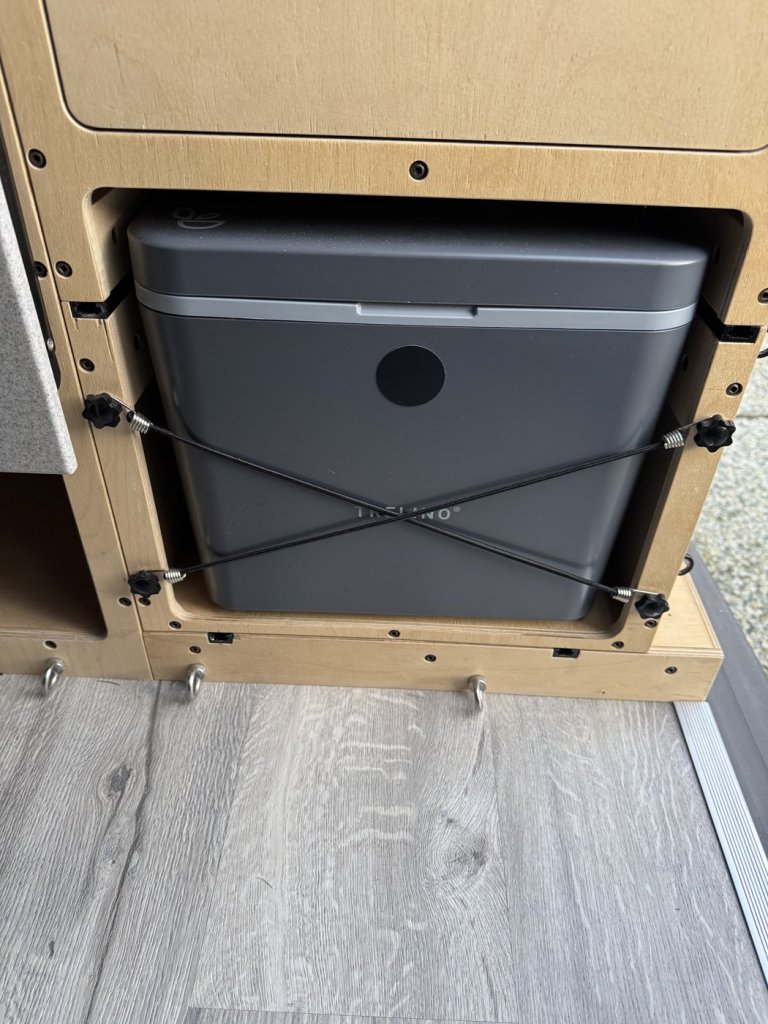
The storage unit currently holds a separating composting toilet, a requirement in some locations and a valuable backup for stealth camping. It slides out for use in a shower tent, and two crisscrossed bungee cords keep it in place while driving. When no toilet is needed, the space works for general storage.
Handy Extras
A shoe tray holder keeps muddy shoes off the floor. After a rainy late-September trip to the Canadian Rockies, I added a golf-cart-style umbrella holder for a 130 cm IKEA umbrella (about CA$7) that shelters the door while changing shoes. It folds down when not in use. I also added an adjustable towel holder and a magnetic-closure garbage bag with a built-in light.
Quick Facts
- Vehicle: Toyota Sienna minivan
- Cooking: induction cooktop, 120 V, no open flame
- Structure: base, storage unit and detachable cooking unit
- Movement: drawer slides with HDPE gliding inserts and oversized latches
- Storage unit: separating composting toilet or general storage
- Extras: shoe tray holder, umbrella holder, towel holder, magnetic garbage bag
Next up, Episode 7: The Electrical Module. I cover the space challenges, why I have two batteries, the Eco-Worthy battery, the Renogy charger and One Core display, the control panel and securing components for safe driving.
← Episode 5: Fridge | Full build story | Episode 7: Electrical →

